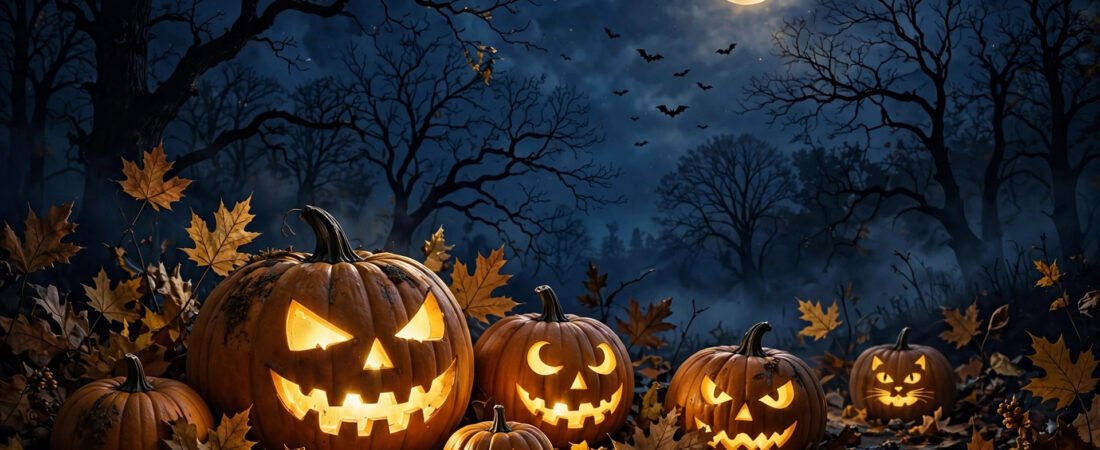
On Saturday, October 31, 2026, millions of children across the United States and the United Kingdom will dress up as ghosts, witches and superheroes, knock on strangers’ doors, and ask for candy. It looks like pure fun — and it is — but behind that simple ritual sits more than 2,000 years of history, from ancient Celtic bonfires and Irish turnip lanterns to what has become one of the biggest retail seasons of the year. This guide to Halloween history and traditions traces how it all fits together.
When Is Halloween 2026?
Halloween always falls on October 31 — and in 2026 that means it lands on a Saturday, perfect timing for parties and late-night trick-or-treating. October 31 sits at the start of a three-day stretch Christians call Allhallowtide: Halloween on the 31st, All Saints’ Day (All Hallows’ Day) on November 1, and All Souls’ Day on November 2. Understanding that trio is the key to understanding Halloween itself.
Samhain: Where Halloween Really Began
Halloween’s roots lie in Samhain, an ancient festival of the Celts in Ireland and Britain observed more than 2,000 years ago around November 1. The name means “summer’s end” in Gaelic, and the festival marked the end of the harvest season, the start of winter — and, in the Celtic calendar, the beginning of the new year.
The Celts believed that on this night the veil between the world of the living and the world of the dead was at its thinnest. Spirits, fairies and demons were thought to roam freely, and people took precautions. Communities lit huge bonfires to brighten the darkness and frighten away supernatural beings, and — most tellingly for us — people donned masks and disguises to hide from the ghosts they believed were about. The earliest form of Halloween costume wasn’t fashion; it was protection.
As Encyclopaedia Britannica notes, Samhain was “an important precursor to Halloween” — a night regarded with trepidation, “fraught with danger, charged with fear, and full of supernatural episodes.” For more on the festival’s Celtic roots, see Smithsonian Magazine’s account of Samhain.
How All Hallows’ Eve Became Halloween
As Christianity spread across Europe, the Church layered its own observances over this season. In the 7th century, Pope Boniface IV established All Saints’ Day — and the date was later moved to November 1, possibly to overshadow the pagan customs of Samhain. The night before, October 31, became All Hallows’ Eve — contracted over time to Halloween.
Around the year 1000, the monastery at Cluny helped establish All Souls’ Day on November 2, a day for praying for the dead. Out of this grew a custom called souling: poor people would go door to door around All Souls’ Day, offering to pray for a household’s departed loved ones in exchange for small spiced cakes known as “soul cakes.” Over time, children took over the practice — and the shape of trick-or-treating began to emerge.
How Halloween Crossed the Atlantic
Halloween was not widely celebrated in the United States until the mid-1800s. The turning point was the Irish Potato Famine of the 1840s, which drove thousands of Irish immigrants to America — New York in particular. They carried their Samhain-era customs with them, and Halloween began to take root on American soil.
For decades, though, American Halloween looked very different from today’s candy run. It was mostly an evening of costume parties, fortune-telling games and neighbourhood pranks. Door-to-door begging in costume shows up in newspapers only in the early 20th century, and Halloween pranking raged through the 1920s and 1930s. One common explanation is that organised, family-friendly trick-or-treating helped tame the night — and after World War II, during the postwar baby boom, it spread into the national habit we know today.
Trick-or-Treating: Guising, Souling and the Candy Boom
Modern trick-or-treating is a blend of two older customs. The first is guising, from Scotland and Ireland, where the tradition of going house to house in costume at Halloween goes back at least as far as the 16th century. Guising children performed a song, a poem, a joke or a “trick” — and only then earned their treat. Nothing was handed over for free. The second is souling, the Christian custom of door-to-door prayers in exchange for soul cakes. Guising supplied the costume and the performance; souling supplied the door-to-door request.
The phrase “trick or treat” itself first appeared in print in Canadian newspapers in the late 1910s and 1920s, and interestingly, saying “trick or treat” only became common in Scotland and Ireland in the 2000s — before that, Irish children would more typically say “help the Halloween party” at the door.
Early American trick-or-treaters received cookies, cake, fruit, nuts, coins and small toys. Wrapped candy became the standard only later in the 20th century, as candy makers began marketing their products specifically for Halloween — and the numbers are now enormous. According to the National Retail Federation’s annual consumer survey (the latest available, published September 2025), Americans were projected to spend a record $13.1 billion on Halloween 2025, up from $11.6 billion the year before and the previous record of $12.2 billion set in 2023. Nearly three-quarters of consumers (73%) planned to celebrate, spending an average of $114.45 per person — with $3.9 billion on candy, $4.3 billion on costumes and $4.2 billion on decorations.
Jack-o’-Lanterns: From Turnips to Pumpkins
The glowing pumpkin on the doorstep is an American upgrade of a much older — and harder — tradition. In 19th-century Ireland and Scotland, people carved turnips, not pumpkins, along with beets and potatoes. These carved root vegetables, lit with an ember, were placed near doorways to ward off nefarious spirits on Samhain. The National Museum of Ireland still holds plaster casts of these eerie “ghost turnip” carvings (see Smithsonian Magazine on the turnip-lantern era).
The custom is tied to the Irish legend of “Stingy Jack,” a man who tricked the devil and was consequently banned from both heaven and hell. The devil gave him a single burning coal, which Jack placed inside a hollowed-out turnip — and so “Jack of the Lantern” was said to roam the earth forever with his glowing lantern.
When Irish immigrants arrived in North America in the 1840s and 1850s, they brought the carving custom with them — and found pumpkins, a crop native to the Americas, that were far larger and easier to carve than dense, fist-sized turnips. The pumpkin jack-o’-lantern quickly became the standard, and the turnip original was largely forgotten outside of Ireland and Scotland.
Why We Wear Costumes
Costumes are the oldest Halloween tradition of all, tracing directly back to those Celtic masks worn to confuse wandering spirits. The disguise moved from supernatural protection to social performance over the centuries, and today it is pure theatre — from monsters to movie characters to memes. According to the NRF survey, about 51% of celebrants dress in costume, with children favouring Spider-Man, princesses, witches, ghosts and superheroes, adults opting for witches, vampires, pirates, cats and Batman — and even pets getting in on the act, dressed as pumpkins, hot dogs and bumblebees.
Halloween in the US vs the UK Today
The holiday crossed the Atlantic westward — and then, in its modern American form, crossed back. In the United States, Halloween is defined by neighbourhood trick-or-treating, elaborate house decorating, costume parties, haunted houses (about a quarter of celebrants plan to visit one) and big-city costume parades.
In the United Kingdom, the traditions remain a little closer to their roots. Trick-or-treating is widespread, but in Scotland guising persists in its older form — a child may still be expected to sing a song or tell a joke before earning their treat. Traditional party games such as apple bobbing survive: apples were plentiful around Samhain, and the games were popular in Great Britain for centuries, often used to prophesy a romance, with apples tagged with the names of sweethearts (see HISTORY on apple bobbing’s Halloween connection). Bonfires — direct descendants of the Samhain fires lit to ward off spirits — remain part of the season’s imagery across the British Isles.
Is Halloween a Public Holiday?
No — not in either country. In the United States, Halloween is not one of the 11 federal holidays established by Congress; federal offices, banks, schools and most workplaces stay open on October 31. In the United Kingdom, it is not a bank holiday either — it is a normal working day. Halloween carries enormous cultural weight, but none of the legal weight of a public holiday. Think of it like Valentine’s Day: widely celebrated, commercially huge, and nobody gets the day off.
Halloween History and Traditions FAQs
Why is Halloween celebrated on October 31?
Because it is the eve of All Saints’ Day (November 1), which was deliberately placed over the ancient Celtic festival of Samhain. October 31 opens the three-day Allhallowtide season.
Why do we carve pumpkins instead of turnips?
Turnips were the original jack-o’-lanterns, carved in Ireland and Scotland to ward off spirits. When Irish immigrants brought the custom to North America in the 1840s and 1850s, they found pumpkins — native to the Americas, much larger and far easier to hollow out — and the tradition switched almost overnight.
When should kids go trick-or-treating?
Most trick-or-treating happens after dark on October 31, typically from around dusk until about 8 or 9 p.m., though exact norms vary by neighbourhood. In the US, many communities also set official “trick-or-treat hours” — it is worth checking your town’s guidance.
Is Halloween a religious holiday?
It has both pagan (Samhain) and Christian (All Saints’ Day, All Souls’ Day) roots, but today it is overwhelmingly a secular, community celebration — costumes, candy and parties rather than worship.
Why do we wear costumes on Halloween?
It is the oldest trick in the book: the ancient Celts wore masks and disguises on Samhain to hide from or blend in with the spirits believed to be roaming that night. The disguise eventually became the party costume.
From Celtic bonfires to glowing doorsteps, Halloween’s journey spans two millennia — and the season rolls on straight toward the year’s next great celebration. For the date, history and traditions of that one, see our guide to Christmas Day 2026.